Interpersonal Effectiveness - part 3

When we hear others being critical of something we’ve done, we tend to believe that they are being critical of ‘us’ rather than our actions. This may be because we’ve been criticised in an unhelpful way in the past, which resulted in feeling blamed, rejected or unwanted.
However, very often the person offering criticism is intending the criticism to be helpful to us, pointing out the affect of our actions. If we were able to accept that criticism in the spirit in which it was intended, then maybe we could make positive helpful changes.
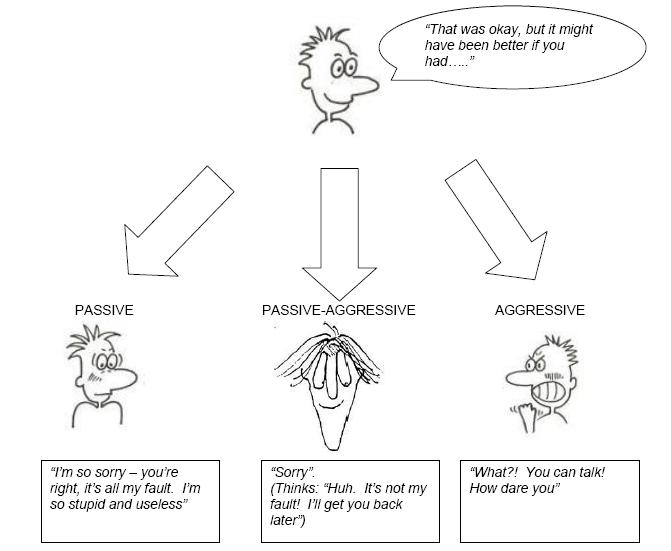
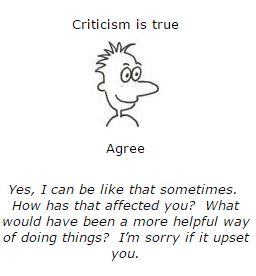
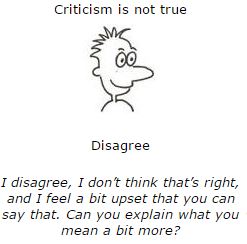
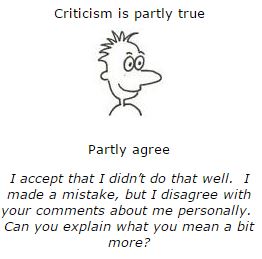
Whereas, if we were able to consider the criticism in a different way, then maybe something positive could come out of it. When you receive criticism, consider whether the criticism is:
- True
- Not true
- Partly true
So we can respond in a more helpful way.
- Assertiveness PDF (Interpersonal Effectiveness)
- DBT Dialectical Behaviour Therapy
- MP3 guided imagery and relaxation downloads
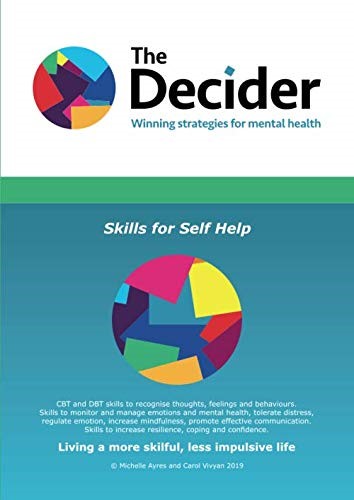
- The Decider - a pictorial prompt sheet and manual to help us choose the best coping skill
- Relaxation
- Self-Help Course Step 1
- Mindful Breathing
- Colour Breathing
- Anxiety self-help
- Depression self-help
- Anger self-help
- Multimodal Self-Help & Treatment Plan
- STOPP
- Defusing Exercises
- Different Perspectives
- The Helicopter View
- Imagery Self-Help
- NOW
- Meditation
- Accept, Change or Let go?
- ACE Activity
- Distress Tolerance
- Emotion Regulation
- Interpersonal Effectiveness
See also: The Decider Skills for Self Help online course
More information:

Self Help Books
How to be Assertive In Any Situation
When I Say No, I Feel Guilty: How to Cope, Using the Skills of Systematic Assertive Therapy
Brilliant Assertiveness: What the Most Assertive People Know, Do and Say (Brilliant Lifeskills)
Assertiveness: How to Stand Up for Yourself and Still Win the Respect of Others




BOOKS WE LOVE