Cognitive Behaviour Therapy
What is CBT and how can it help?
Cognitive Behaviour Therapy (CBT) is a talking therapy that looks at :
- How you think about yourself, the world and other people
- How what you do affects your feelings and thoughts
- How the way you think and feel affects the way you act
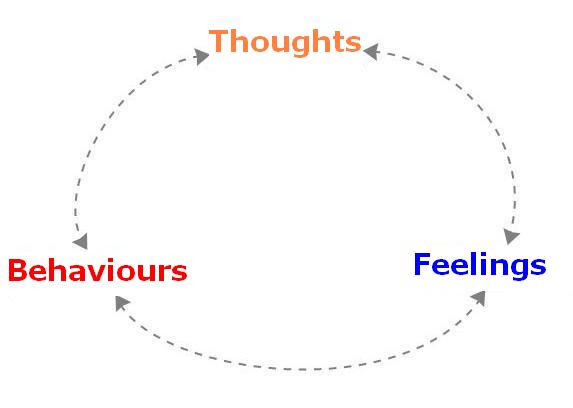
Thoughts feelings and behaviours are all linked, so if I think upsetting thoughts, then I will feel upset and then I am likely to do something that will increase the thoughts and strengthen the feelings. A vicious cycle.
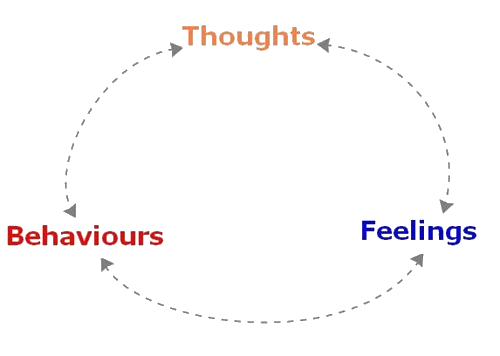
We can break this vicious cycle by changing the way we think and act.
By making links between what we do, think and feel, CBT can help us make changes in the way we think ("Cognitive") and the way we act ("Behaviour)". Making changes in what we think will affect what you do and feel, and changing what we do, affects the way we think and feel. Making these changes then can help us feel better.
Whilst it is helpful to discuss the past and understand how our pasts have influenced our lives and how the problems have come about, CBT mostly focuses on looking for ways to improve your mental wellbeing now and making positive steps for the future.
CBT says that it's not the event which causes our emotions, but how we interpret that event - what we think or what meaning we give that event or situation.
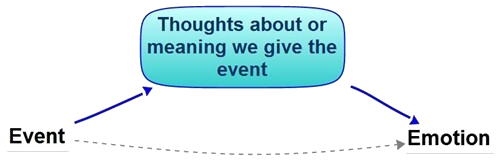
For instance, if someone you know passes you in the street without acknowledging you, you can interpret it several ways. You might think they don't want to know you because no-one likes you (which may lead you to feel depressed), your thought may be that you hope they don't stop to talk to you because you won't know what to say and you'll make a fool of yourself (anxiety), you may think she's being deliberately snotty (leading to anger). A healthier response might be that she just didn't see you.
Another example maybe someone who's depressed might wake up in the morning and think: "This is going to be another awful day", "I'm going to mess up again", or "What's the point of anything?", which will make them feel even more depressed (feelings), and may prompt them to pull the covers over their head and stay in bed (behaviours).
It's very likely that this will increase their negative thoughts, which in turn will increase the feelings of depression, and make them even less likely to get out of bed. A vicious cycle is the result - continuing to think and act the same way will help maintain our depression (diagram below), or anxiety.
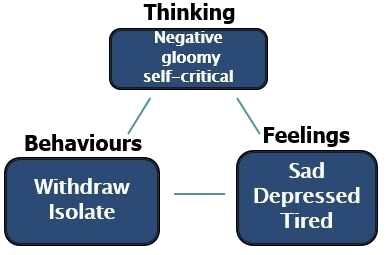
What is CBT - basic vicious cycle
CBT & Vicious Cycles - longer version
Learn effective skills online (external link) The Decider Skills for Self Help online course
BOOKS WE LOVE