Anger Self Help
Self help guide for Anger, using effective CBT strategies. Make sense of your anger, then learn how to make positive changes
Anger Self Help - this page as PDF
Anger is a normal reaction. It energises us into action and can help us make life saving  and vital actions. Anger can be very useful. However, it can become a problem if it seems like we're getting angry very often, and it is affecting our mood, working life, relationships or mental wellbeing.
Anger is a result of thinking that we have been unfairly treated or disrespected, or something is unjust, and we won't stand for it.
Thinking this way leads us to feel angry, which stimulates the body's adrenaline response which is our body's way of helping us to cope with either fighting, or running away ('fight or flight' response). We respond to those thoughts and feelings, by acting, or feeling an urge to act, in threatening or aggressive ways.
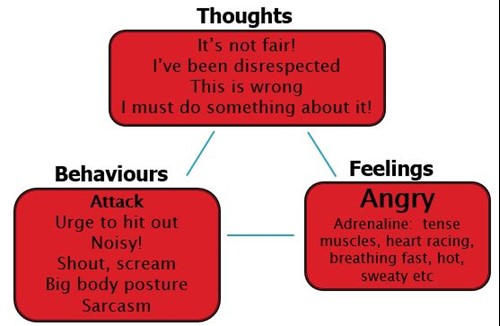
Typical Thoughts
-
I'm being treated unfairly
-
I'm being disrespected
-
They're breaking a rule
-
This is unjust
-
I won't stand for it
Physical Sensations - Alarming Adrenaline When there is real, or we believe there is a real, threat or danger, our bodies' automatic survival mechanism kicks in very quickly. This helps energise us to fight or run away ('fight or flight response'). The action urge associated with anger is the urge to attack. We will notice lots of physical sensations, which might include:
-
heart racing or pounding - enabling good blood supply around our bodies
-
breathing quickly - allowing more oxygen around the body
-
tense muscles - a state of readiness to fight or flee
-
shaking
-
hot, sweating
-
light-headed
-
stomach churning or butterflies
-
fist or teeth clenching
-
physical urge to go towards whatever is making us angry
See this page for Alarming Adrenaline diagram
Angry Behaviours
-
attack
-
aggressive body posture
-
staring & facial expression
-
move towards what is making us angry
-
hit out (or urge to hit out)
-
argue
-
shout
-
run or storm away
-
don't talk
-
sulk
-
sarcasm
The Angry Cycle
We all feel angry some times. Some people tend to become angry easily (a "short fuse"), and some have problems controlling their anger. Anger has consequences, and they often involve hurting other people - more usually their feelings, but sometimes physically.
Anger can cause problems in our personal lives, and affect work and study. After an angry outburst, we can think very critically of ourselves and our actions, leading us to feel guilty, ashamed and lower our mood, which might result in our withdrawing from others, not wanting to do anything (see depression cycle).
To help overcome a persistent anger problem, we need to understand what we are REALLY angry about - which may well be NOT what we are directing our anger towards at that time. It is often due to something related to something from our past, and the current situation FEELS similar, so it triggers our angry response now.
Vicious Cogs of Anger
By looking at the "cogs" that keep the central problem going, we can target and make positive changes in each of the cogs, which will at least, slow down, and at best, stop, the central problem, for example:
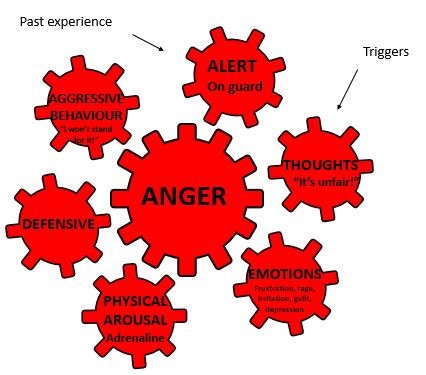
Print a blank Cogs PDF and fill in the factors that keep your anger going.
Anger Self Help - video
Making Positive Changes
Identify your triggers
What or when are the times when you are more likely to get angry? If you can see the patterns, then maybe you can do something about those situations, and do something different.
Behind the wheel?
At work?
When stressed?
With certain people?
When you've been drinking or using other substances?
What to do when you feel angry
STOPP! Pause, take a breath, don't react automatically.
Walk away - you can come back and talk later.
Ask yourself:
-
What am I reacting to?
-
What is it that's really pushing my buttons here?
-
Is this fact or opinion?
-
Am I getting things out of proportion?
-
How important is this really?
-
How important will it be in 6 months time?
-
What harm has actually been done?
-
Am I expecting something from this person or situation that is unrealistic?
-
What's the worst (and best) that could happen? What's most likely to happen?
-
Am I jumping to conclusions about what this person meant? Am I (mis)reading between the lines?
-
Is it possible that they didn't mean that?
-
What's the bigger picture? The helicopter view?
-
What do I want or need from this person or situation? What do they want or need from me? Is there a compromise?
-
What would be the consequences of responding angrily?
-
Is there another way of dealing with this? What would be the most helpful and effective action to take? (for me, for the situation, for the other person)
-
Visualise yourself dealing with the situation in a calm, non-aggressive but assertive way, respecting the rights and opinions of all others involved.
How to deal with the physical sensations of anger
Counteract the body's adrenaline response - it's readiness for action, by using that energy healthily.
Practice calming or mindful breathing - this one act alone will help reduce the physical sensations, emotions and intensity of thoughts.
-
Breathe in blue (for calm) and/or green (for balance), and breathe out red.
Go for a walk, run or cycle, or maybe do some gardening or housework.
Learn effective skills to manage emotion online - The Decider Skills for Self Help online course
Anger Resources
Angry Cogs PDG
Anger Thought Record Sheet PDF
Anger Self Help - this page as PDF
Anger Self Help Quick Reference PDF

DEFUSING ANGER mp3
Female voice, with music.
21 mins 15s 2.50
2.50 
DEFUSING ANGER mp3
Male voice, with music.
26 mins 30s2.50


ANGER RESOURCES
Self Help Books
Overcoming Anger and Irritability
Overcoming Anger: When anger helps and when it hurts
How to Deal with Anger: A 5-step, CBT-based plan for managing anger and overcoming frustration
DEFUSING ANGER mp3
Female voice, with music.
21 mins 15s2.50
DEFUSING ANGER mp3
Male voice, with music.
26 mins 30s2.50
BOOKS WE LOVE